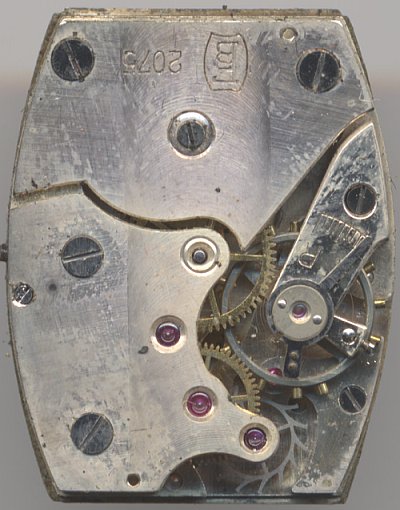
Förster 2075
Description
One of the earliest lever movements by Förster (Bernhard Förster) from Pforzheim in Germany is the large, tonneau-shaped caliber Förster 2075, measuring 8 3/4 by 12 lignes.
It came onto the market in the late 1930s and is already documented in movement searches in the early 1940s.
Its successor, probably from the late 1940s/early 1950s, is the caliber Förster 2080, which is still largely identical.
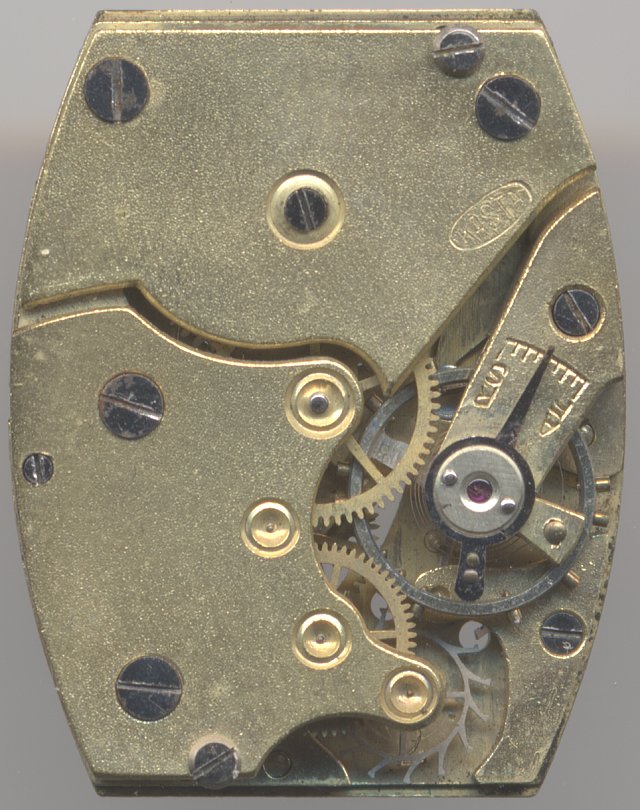
old, 7 jewels version
It usually has 15 jewels, but there is also a simpler, maybe older, 7-jewel version.
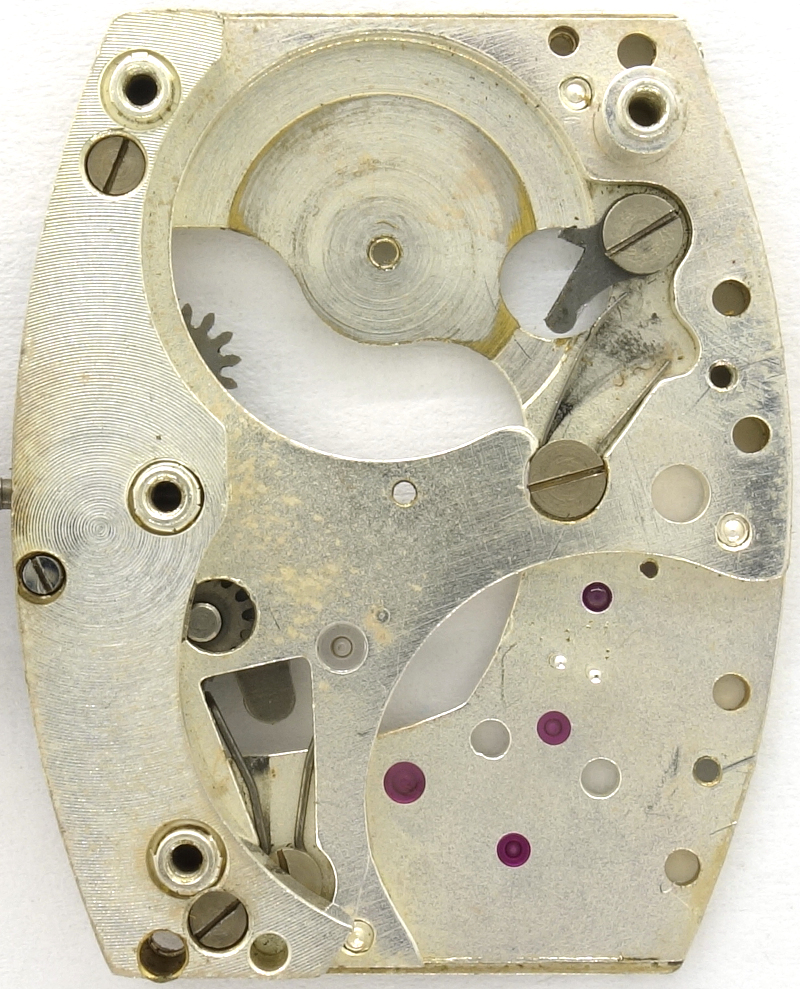
base plate
The special feature of this movement is that the ratchet and spring of the rocking bar winding mechanism are located on the inside of the base plate, and not, as in most rocking bar winding movements, on the dial side.
In the 15-jewel version, all important bearings are equipped with jewels. There are versions where the third wheel on the dial side has a transparent, non-ruby-red bearing jewel.
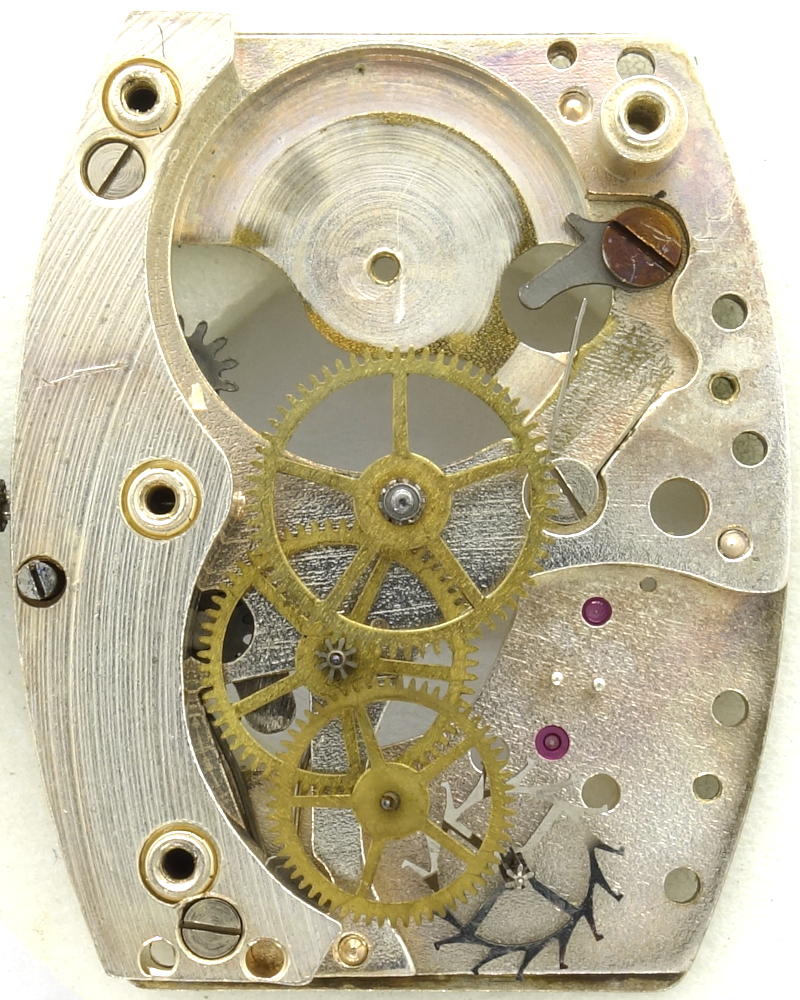
gear train
The gear train of this rather tall pillar movement is conventionally constructed:
The mainspring barrel drives the central minute wheel, followed by the third wheel, the off-center seconds wheel at 6 o’clock, and the escapement wheel.
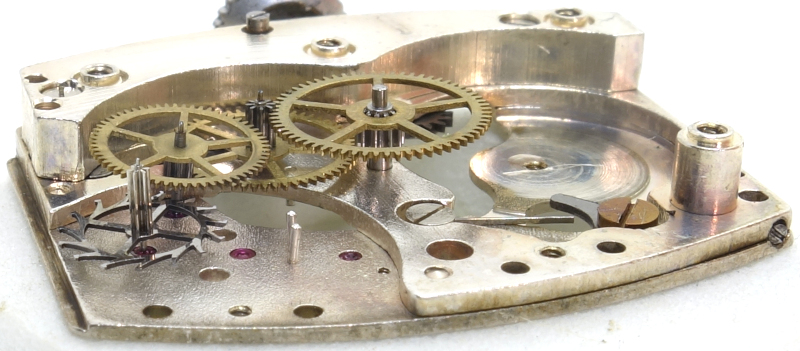
side view of the gear train
The Förster 2075 uses a monometallic screw balance that is not yet shock protected. It beats with 18,000 A/h and can be easily regulated using a particularly long regulator hand.
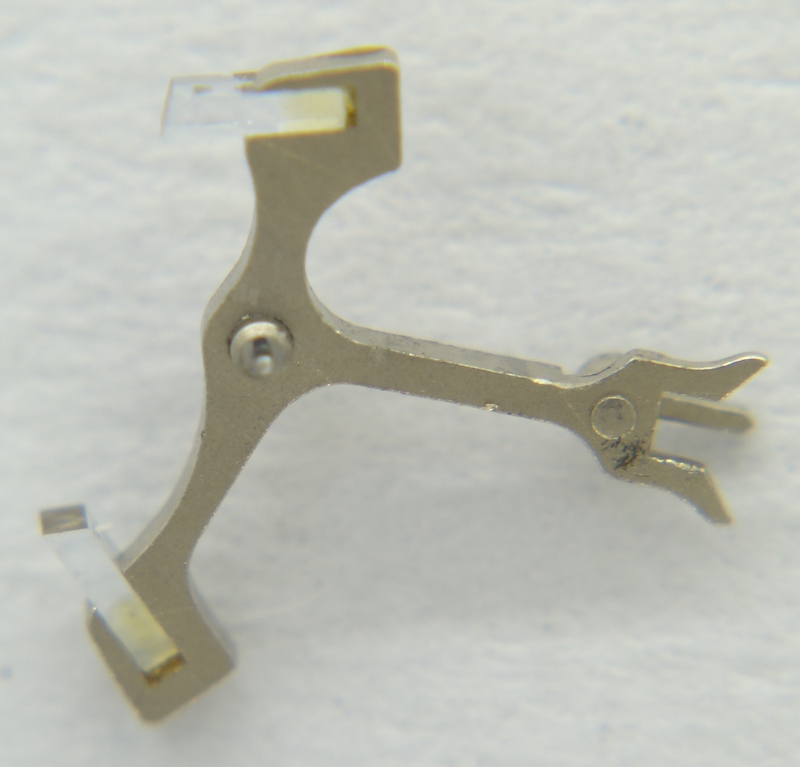
Detail: Lever
There are versions where the pallets are transparent. Technically, this shouldn’t make any difference to a relatively simple pallet-type movement like the one at hand.
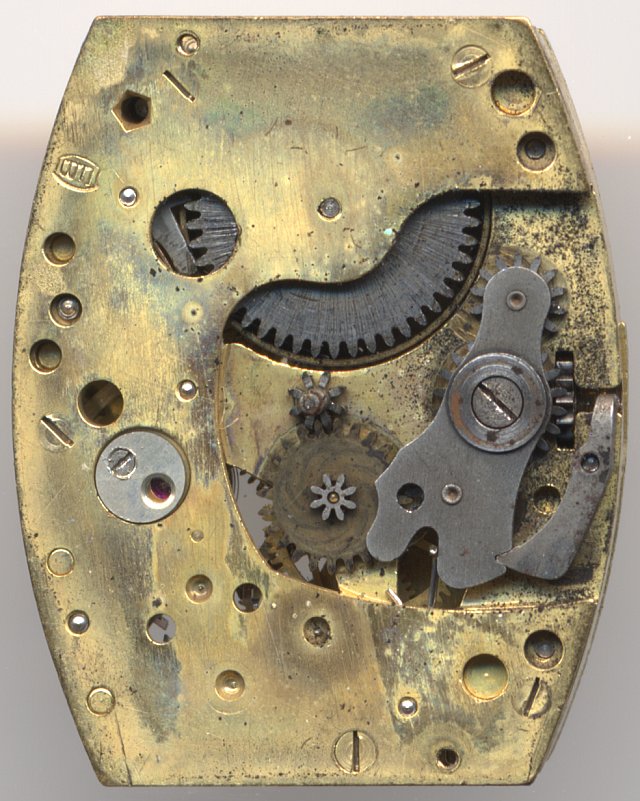
dial side of the 7 jewels version
The rocking bar winding mechanism is clearly visible on the dial side. It’s simpler and therefore cheaper than a yoke winding mechanism, but still perfectly adequate.
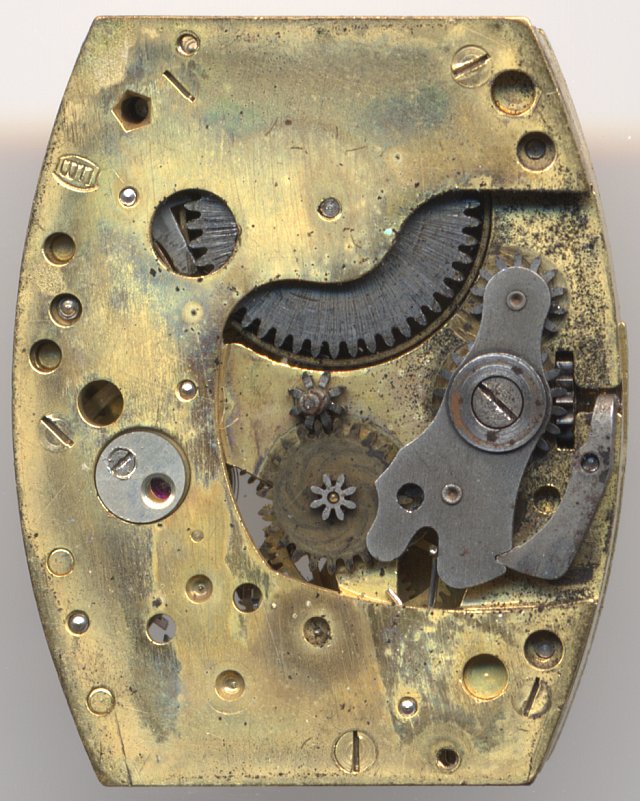
Förster 2075: Dial side
If you look closely, you can even see the cutout for one of the two transparent lever palettes, along with that palette, at the 7 o’clock position, relatively far out.
In the lab
Timegrapher result
Despite a simple service, the timegrapher results are still not as good as hoped; professional service could certainly improve this.| horizontal positions | |||
|---|---|---|---|
| dial up | +-0 s/d | 238° | 2.5ms |
| dial down | +3 s/d | 247° | 1.7ms |
| vertical positions | |||
| crown right (12 up) | +12 s/d | 184° | 3.3ms |
| crown up (3 up) | -18 s/d | 182° | 2.8ms |
| crown left (6 up) | +68 s/d | 174° | 3.3ms |
| crown down (9 up) | +100 s/d | 190° | 3.5ms |
Technical data
| Manufacturer: | Förster |
| Caliber: | 2075 |
| Size: | 8 3/4 x 12''' (measured: 20,0 x 24,4mm) |
| A/h: | 18000 |
| Number of jewels: | 7/15 |
| Escapement: | Pallet lever |
| Balance types: | Nickel screw balance |
| Shock protection(s): | none |
| Balance bearing / direction hairspring: | Clockwise |
| Moveable stud: | yes |
| Adjust mechanism: | Long regulator arm |
| Construction: |
|
| Construction type: | pillar construction |
| Winding mechanism: | rocking bar winding system |
| Setting lever spring: | 4 holes |
| Attachment of setting lever: | screwed |
| Features: |
|
| References: | Feilner: Bl. 15 582 Flume: 1942 319 905 Jacob: 1942 16005 |
| Datasheet: | Furniture catalog late 1940s |
| Inventory number: | 24024 |
Usage gallery
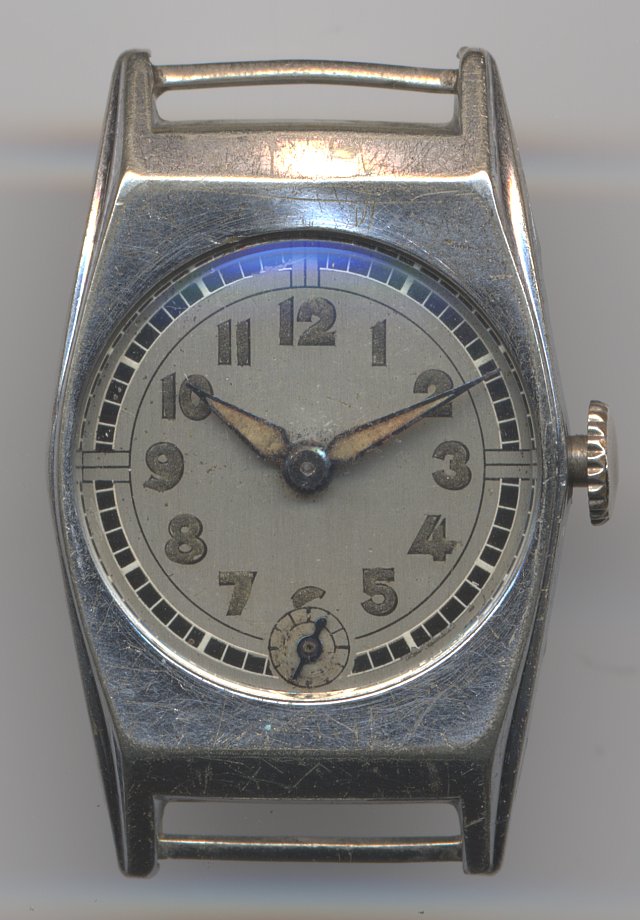
anonymous gents watch
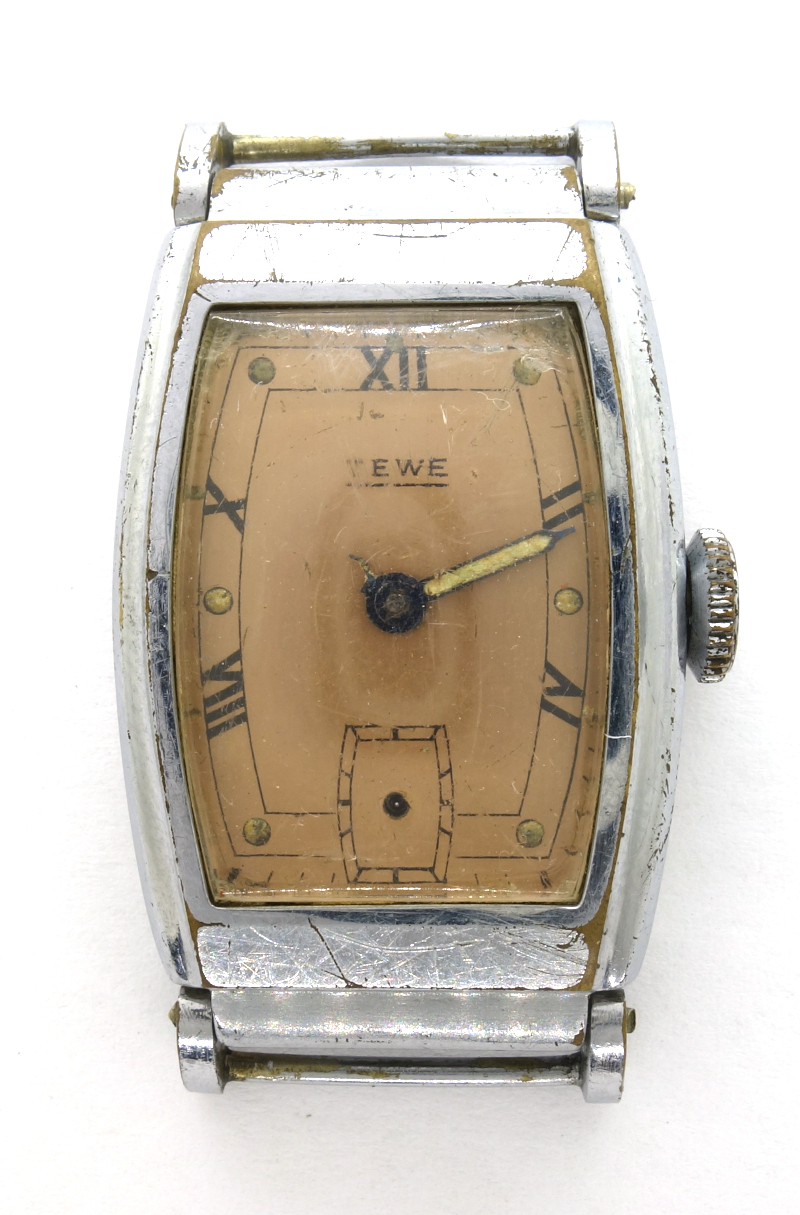
Tewe gents watch
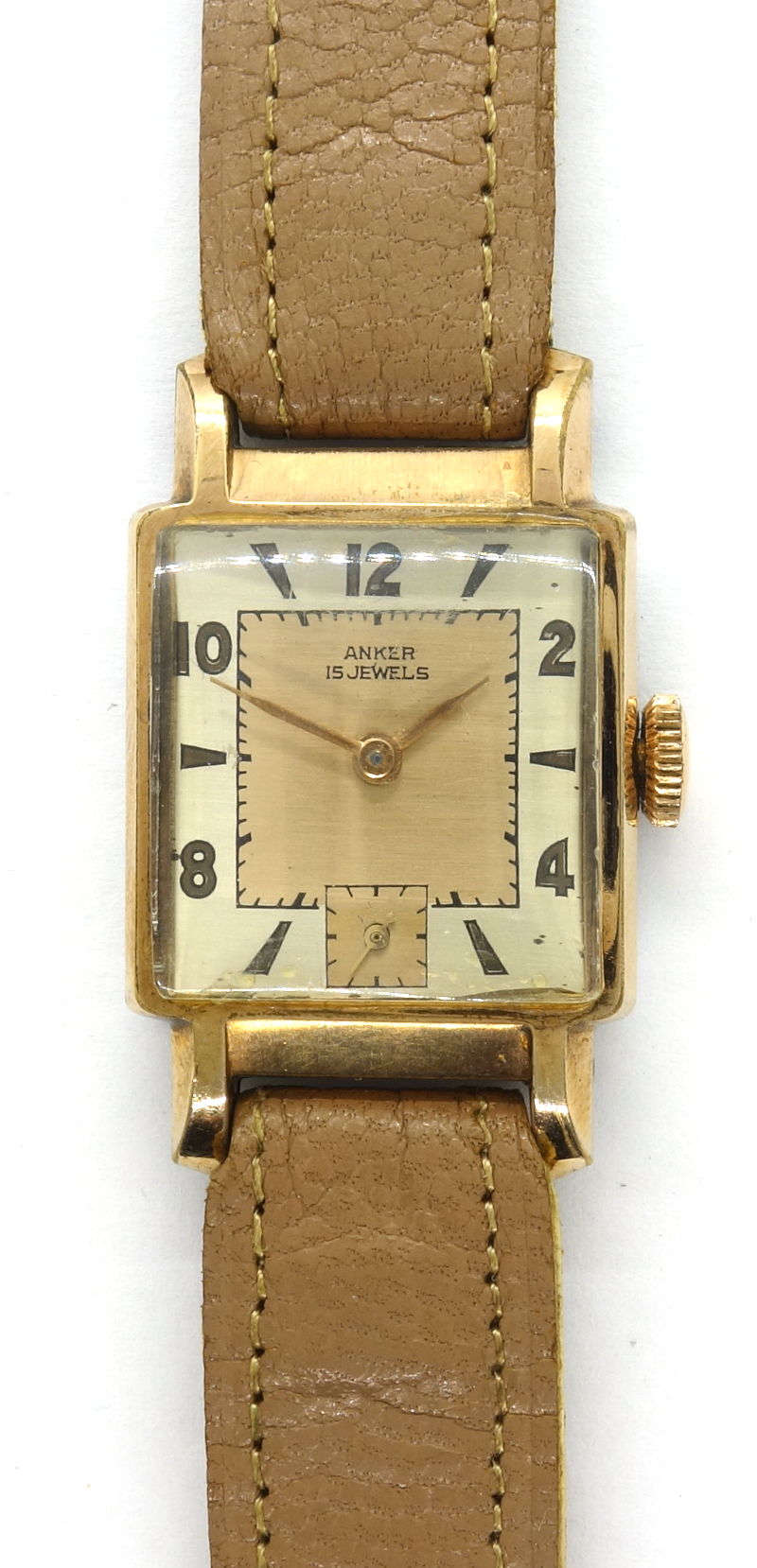
Anker gents watch