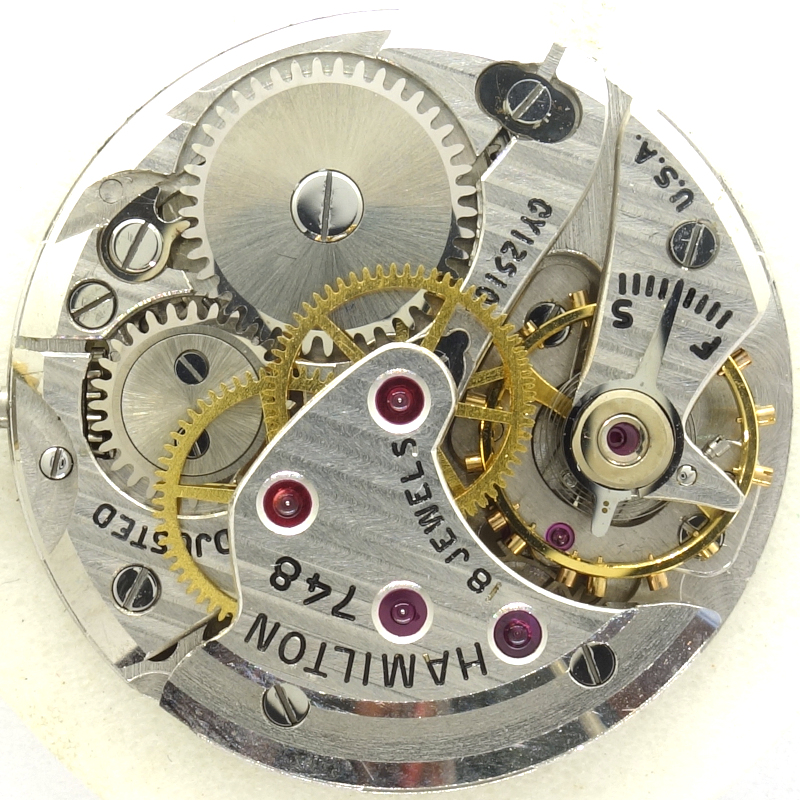
Hamilton 748
Description
At the end of 1940s, the very high-quality, rather small caliber Hamilton 748, with a diameter of only 23.7mm (American size 8/0s or also 10 1/2 lignes according to European standards), came onto the market, attracting attention with its very unusual construction of the direct central seconds hand indication.
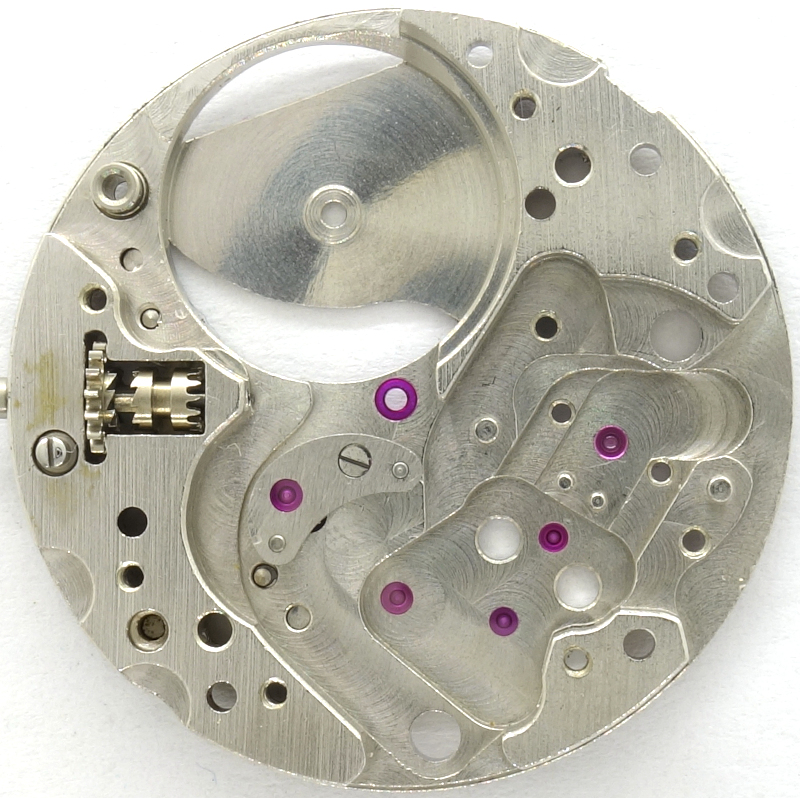
base plate
Except for the mainspring barrel, all bearings, even that of the minute wheel, are jeweled. And as you can see at 8 o’clock, the bearing of the third wheel even has an extra bearing with a bridge.
We’ll discuss the two threaded rods next to the balance wheel bearing later.
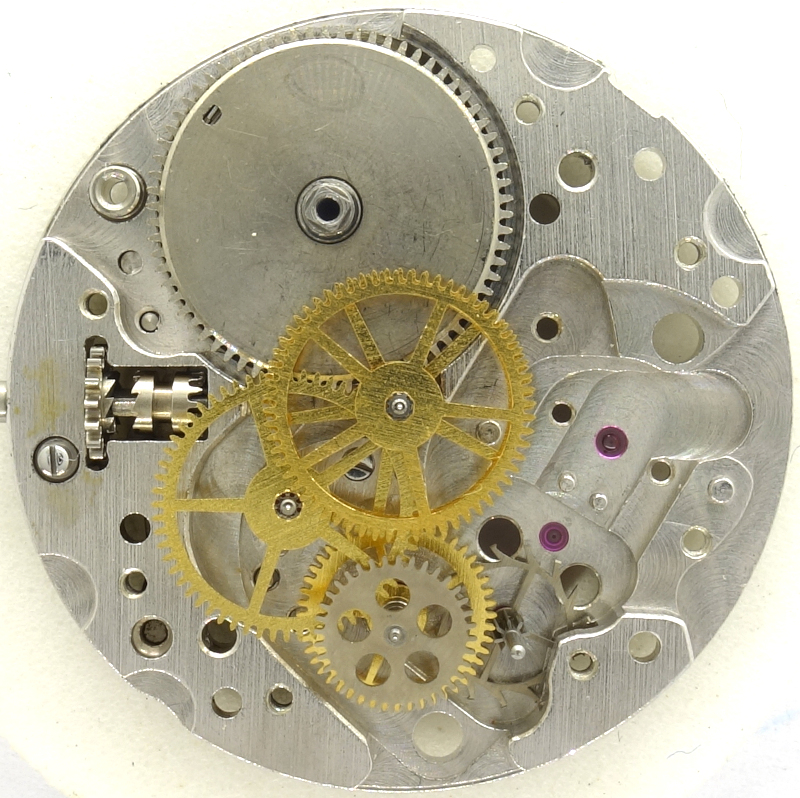
gear train
The gear train has one more wheel than usual: The mainspring barrel drives the central minute wheel, followed by the third wheel, central seconds wheel, seconds wheel (with a very large pinion, actually even a separate wheel) and the escape wheel, which is recognizably counterclockwise.
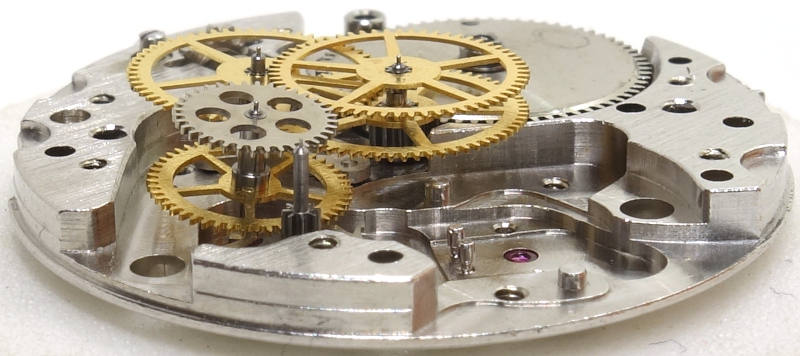
side view of the gear train
The gold-colored Glucydur screw balance is stunningly beautiful; it is not yet shock-protected and beats contemporarily slow with 18,000 A/h. These can be adjusted using a long, polished regulator index, which determines the length of the hairspring with Breguet terminal curve.
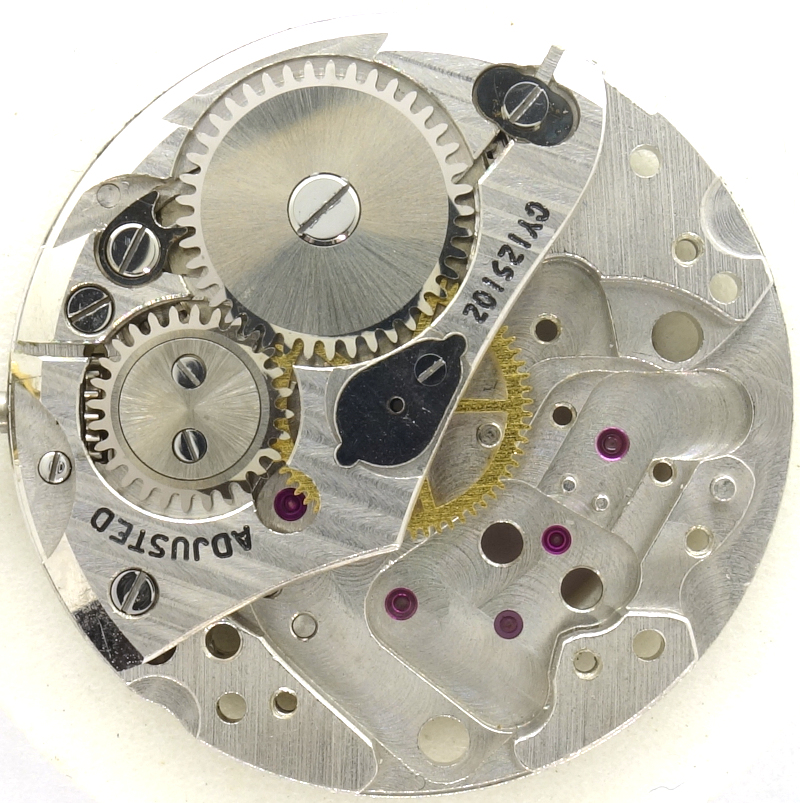
base plate with minute wheel and barrel bridge
The mainspring barrel and the central minute wheel are mounted under the mainspring barrel bridge (here in the newer two-part version).
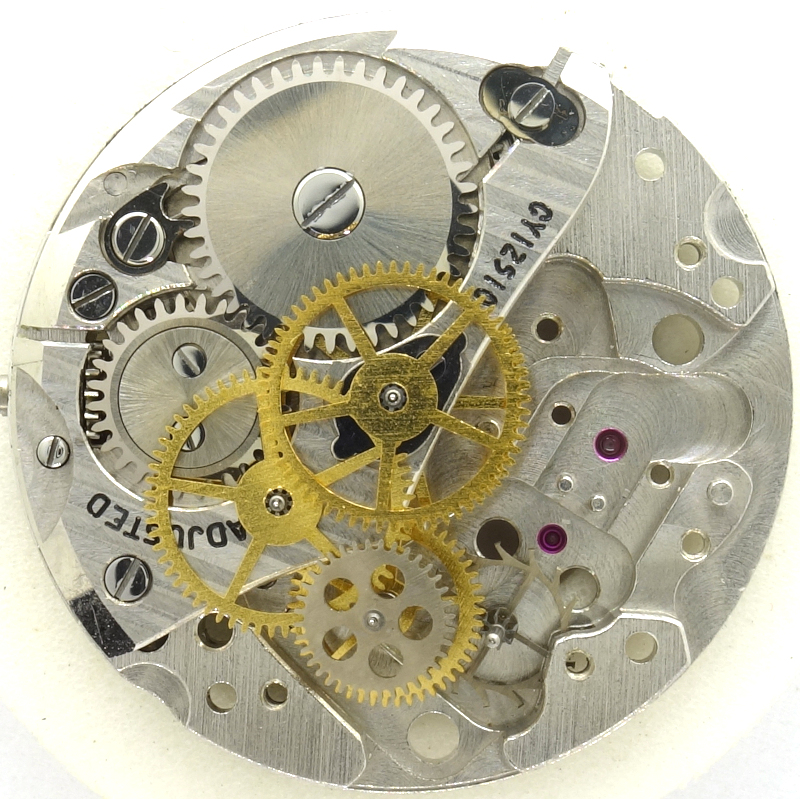
partially mounted gear train
The central seconds wheel and the third wheel run above the mainspring bridge. The large pinion of the seconds wheel, which is actually a separate gear, engages with the central seconds wheel, also above the mainspring bridge. The escape wheel and the seconds wheel run below the mainspring bridge and below the balance wheel, respectively. This means we are dealing with a two-storey construction.
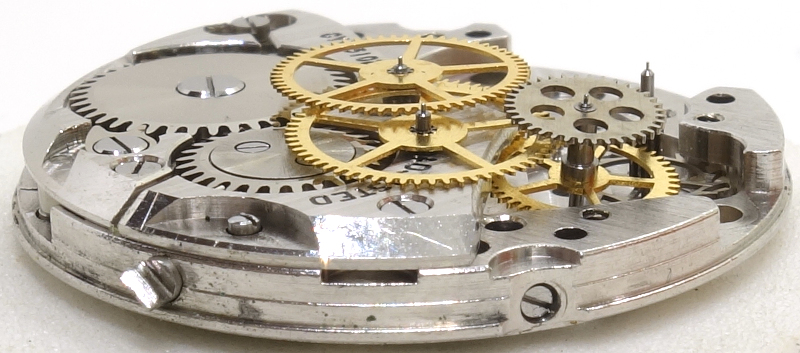
side view of the partially mounted gear train
The aforementioned four wheels are bearted under their own, beautifully curved bridge, which finally explains the unusual number of 18 stones.
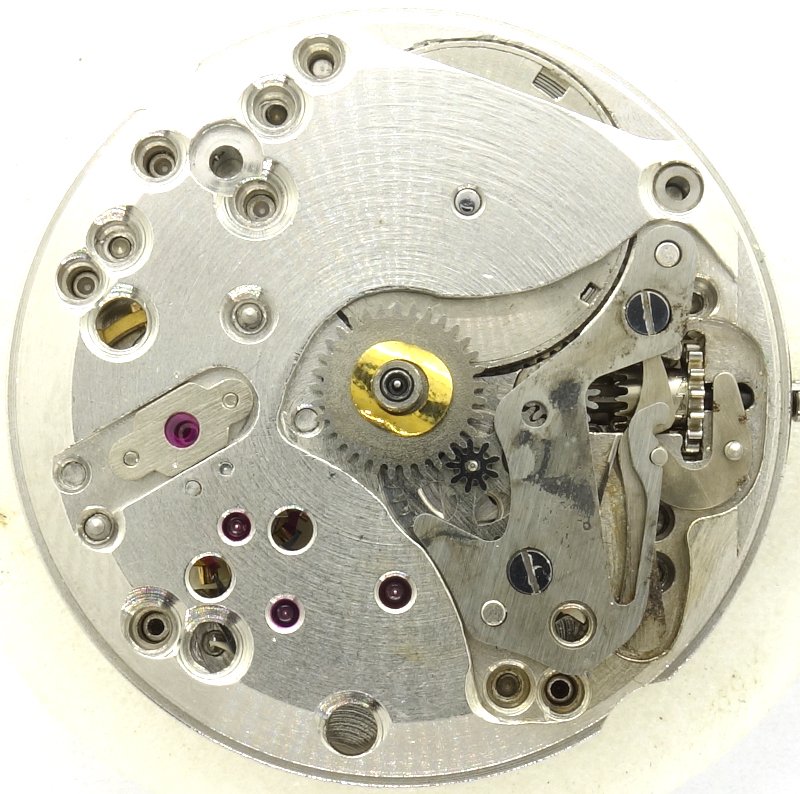
Hamilton 748: Dial side
The dial side, of course, can’t compete with the spectacular movement side, but even here the curved combination of the setting lever spring and setting lever is pleasing.
The fastening of the cap jewel for the dial-side balance bearing is quite unusual: The bearing plate is attached at the movement side (!) with two screws and not on the dial side. This solution isn’t particularly service-friendly, but it also explains the purpose of the two threaded holes next to the balance bearing mentioned above.
In the lab
Timegrapher result
The timekeeping results on the timing machine are still absolutely remarkable even after more than 75 years, especially the practically non-existent beat error, and that with a fixed spiral stud carrier!| horizontal positions | |||
|---|---|---|---|
| dial up | +6 s/d | 315° | 0.0ms |
| dial down | +4 s/d | 290° | 0.1ms |
| vertical positions | |||
| crown right (12 up) | +16 s/d | 258° | 0.0ms |
| crown up (3 up) | -1 s/d | 254° | 0.0ms |
| crown left (6 up) | -17 s/d | 270° | 0.2ms |
| crown down (9 up) | +10 s/d | 259° | 0.4ms |
Technical data
| Manufacturer: | Hamilton |
| Caliber: | 748 |
| Caliber base: | Hamilton 747 |
| Size: | 8/0s (measured: 23,7mm) |
| A/h: | 18000 |
| Number of jewels: | 18 |
| Escapement: | Pallet lever |
| Balance types: | Glucydur screw balance (two legs) |
| Shock protection(s): | none |
| Balance bearing / direction hairspring: | Clockwise |
| Moveable stud: | no |
| Adjust mechanism: | Long regulator arm |
| Construction: |
|
| Construction type: | solid construction |
| Winding mechanism: | yoke winding system |
| Setting lever spring: | 6 holes |
| Attachment of setting lever: | screwed |
| Features: |
|
| Production years: | ca. 1948 - 1954 |
| Production figures: | 232.000 |
| References: | Feilner: Bl. 31 3073 |
| Mentioning in literature (years): | 1953 |
| Inventory number: | 24034 |
Usage gallery
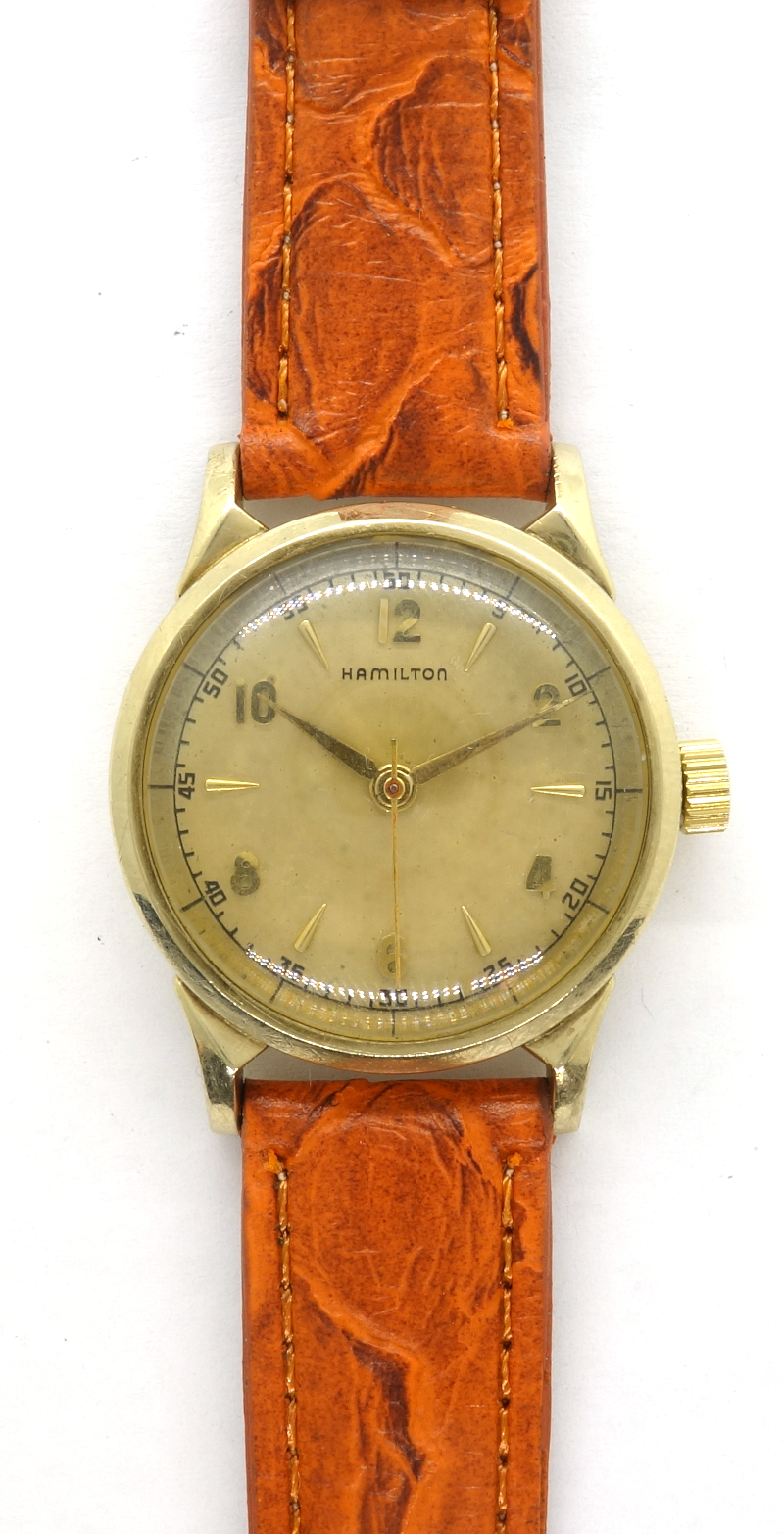
Hamilton Norton CLD gelts watch