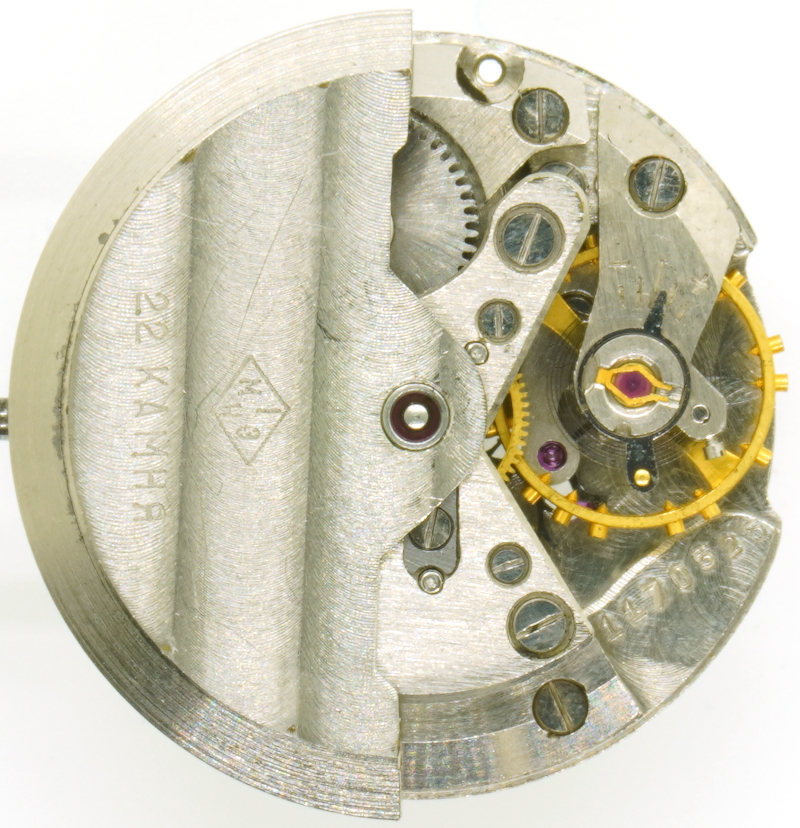
Poljot 2415A
Description
In 1955, the first Moscow watch factory, later known as “Poljot,” launched its first automatic movement, the caliber Rodina, also known as the Poljot 2415A.
At over 6 mm thick, it was still quite bulky and was replaced in 1962 by the caliber Poljot 2415.
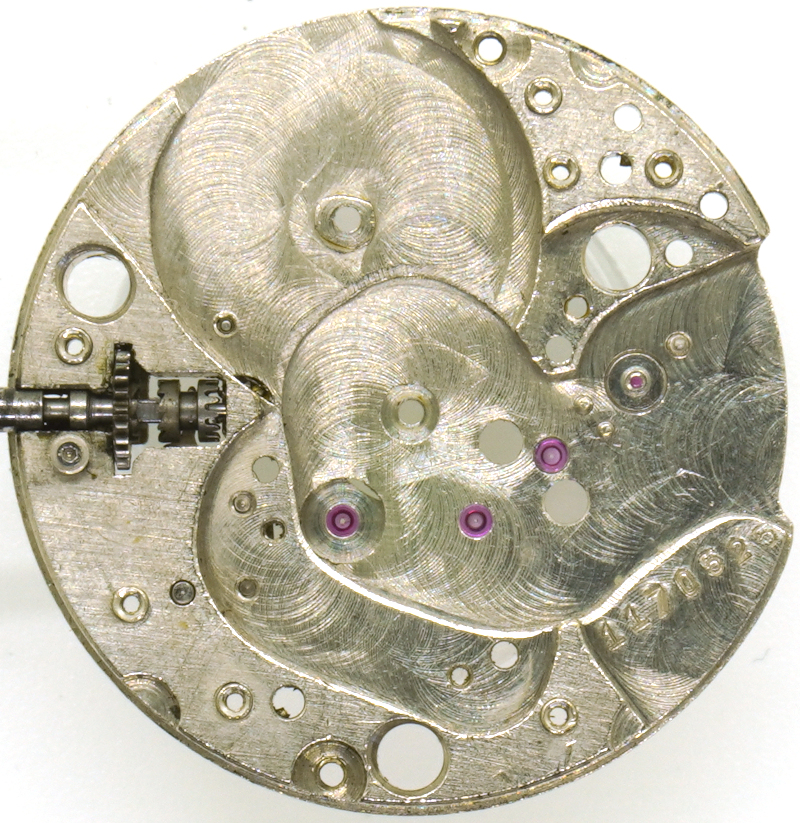
base plate
The mainplate shows a neatly crafted movement, in which all important bearings are equipped with jewels.
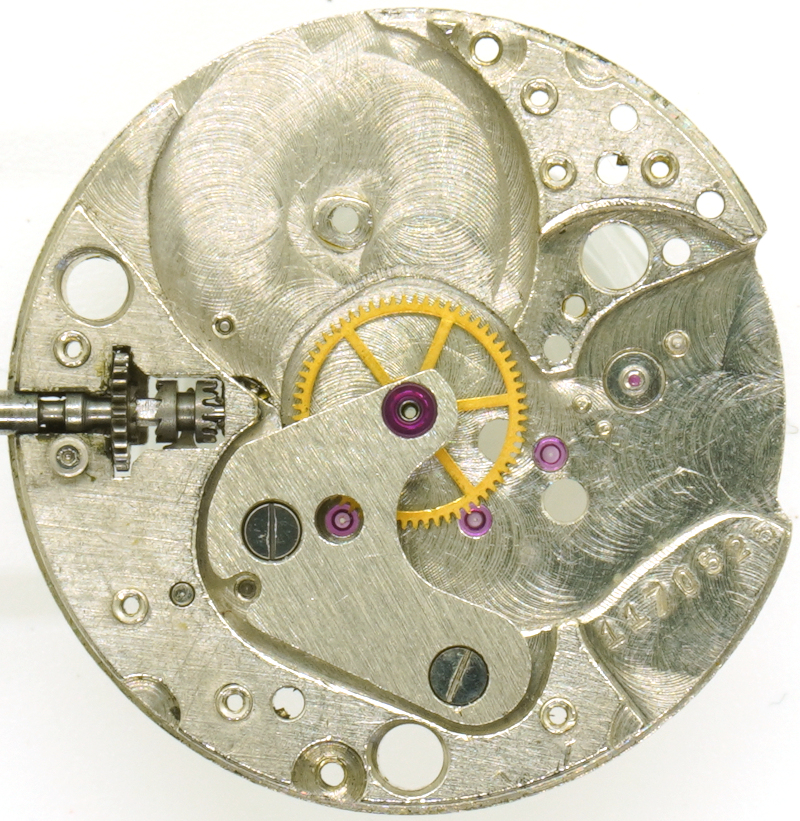
base plate with center minute wheel
Since a classic gear train design from the 1950s was used, there is a central minute wheel, which is mounted under its own cock and is driven directly by the mainspring barrel.
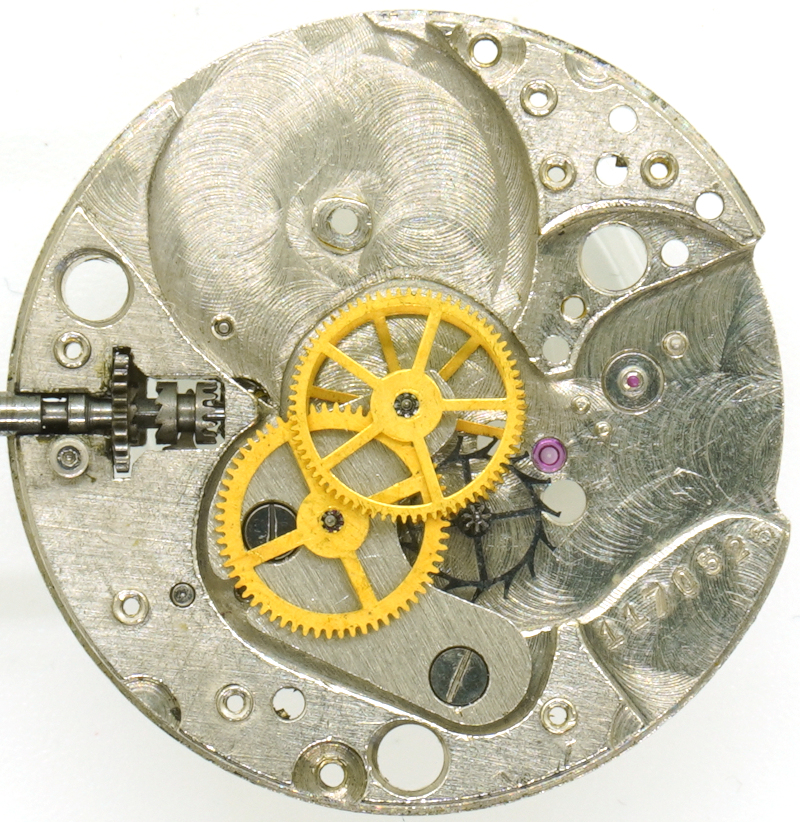
gear train
The rest of the gear train is also up to contemporary standards: The minute wheel drives the third wheel, followed by the central seconds wheel and finally the escape wheel.
It’s easy to imagine that this design results in a rather tall movement. The successor features a more modern design with a height of under 4 mm, which is of course also due to a different automatic movement design.
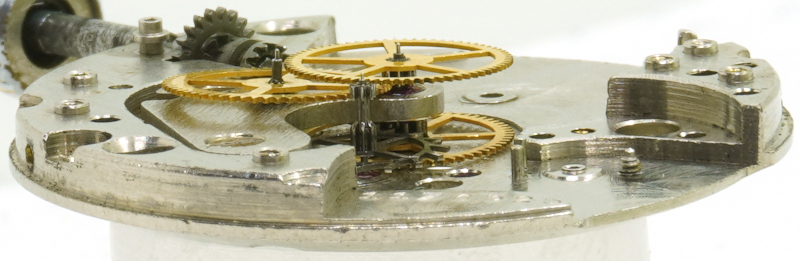
side view of the gear train
With 18,000 A/h by the shock-protected screw balance, it is a contemporary slow-beat movement. A very positive feature is the regulation with the aid of a regulator arm, albeit a short one, and the hairspring’s Breguet terminal curve.
A Swiss pallet fork escapement is used.
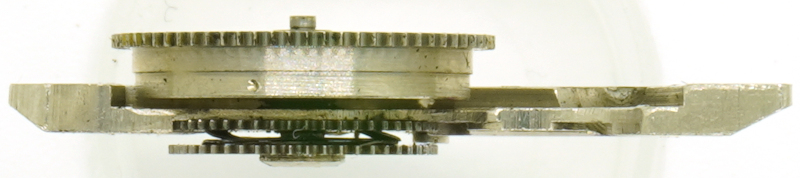
multi-plate clutch of the ratchet wheel
To decouple the automatic winding mechanism during manual winding, a lamellar clutch is used on the ratchet wheel, just as various other manufacturers did at that time.
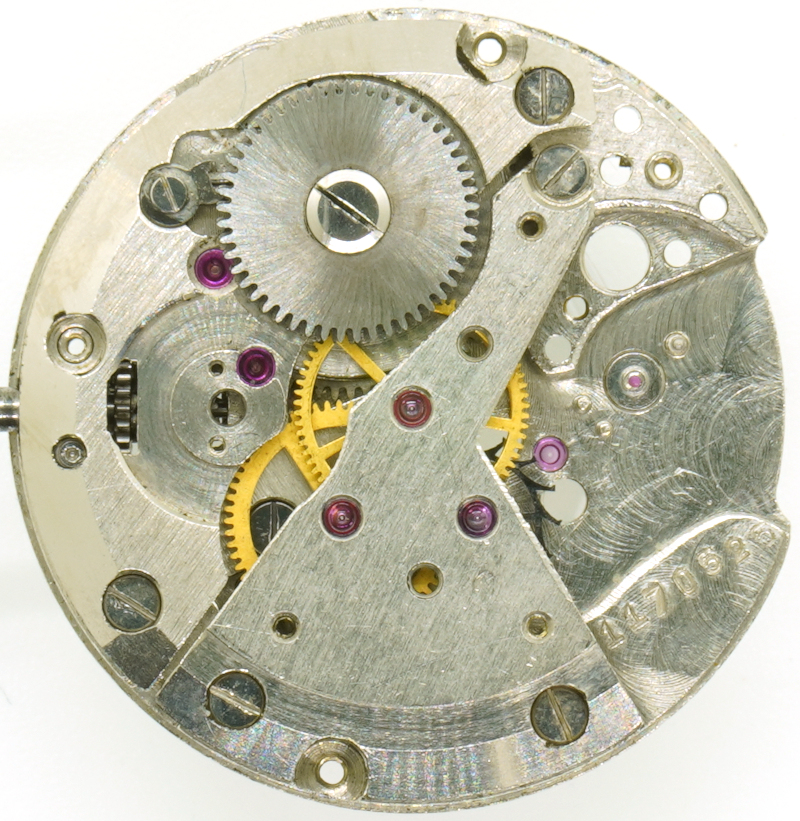
w/o crown wheel
The automatic mechanism extends over a large part of the movement; among other things, the penultimate reduction wheel is located near the crown wheel. The bearing is accessible through a cutout in the crown wheel cover, and the crown wheel is hollow.
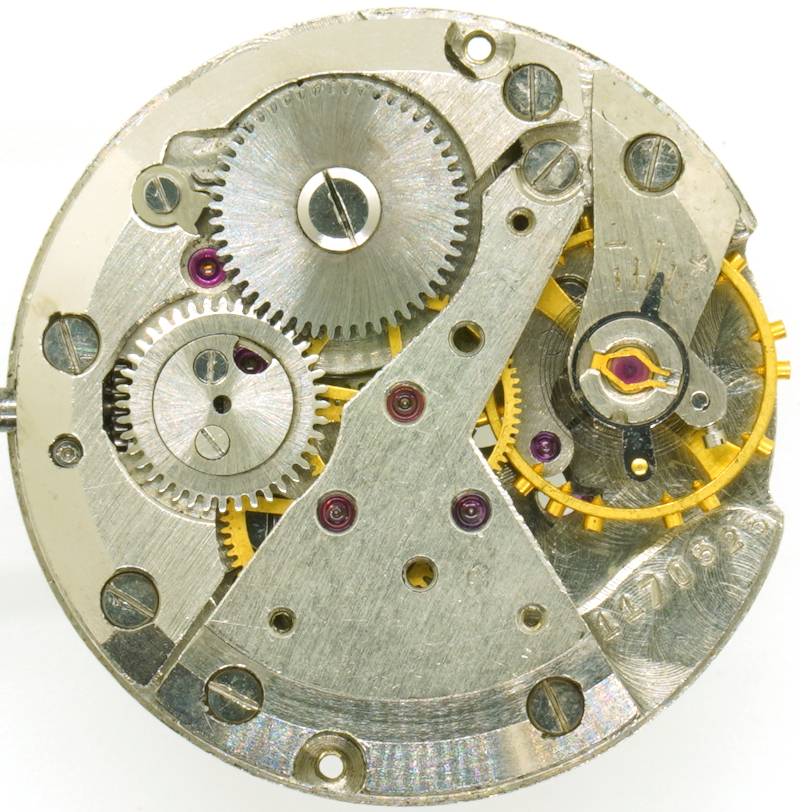
movement w/o automatic
The selfwinding gear train consists of a rocking bar switch that acts on the first reduction wheel, followed by another reduction wheel and finally the double ratchet wheel with multi-plate clutch.
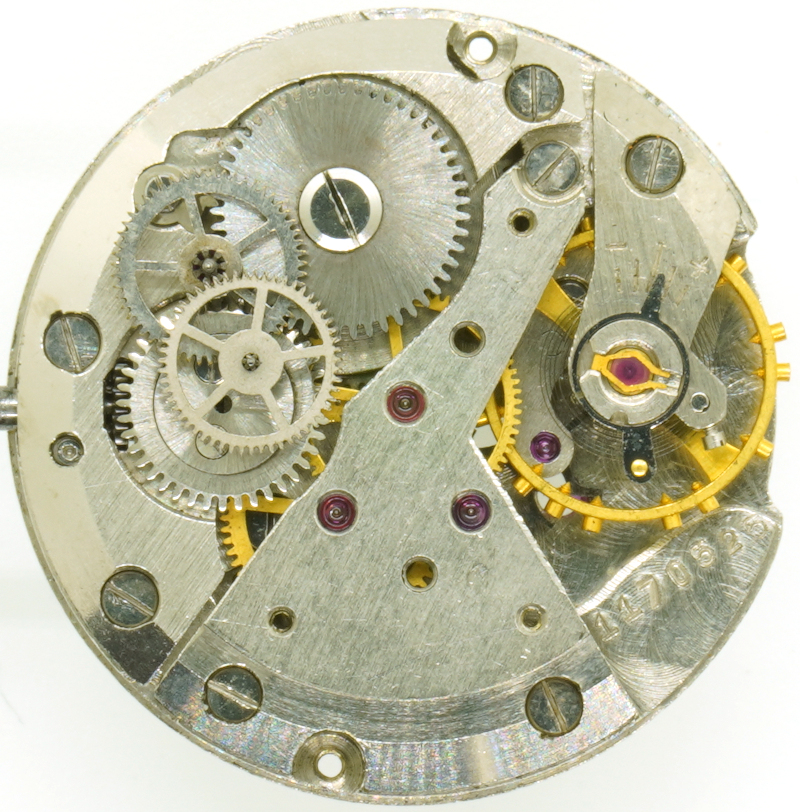
selfwinding gear train
Rectifying the direction of rotation is achieved by a pawl that acts on the first reduction gear and ensures that the rocking bar switch reverses the rotor’s direction of rotation. The rotor can thus be wound in both directions.
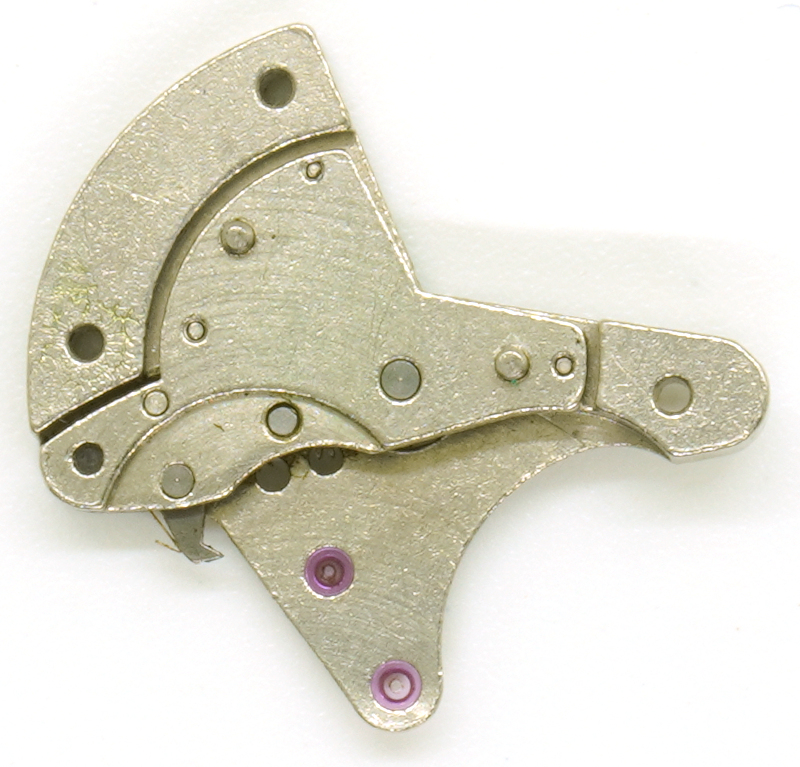
inside the selfwinding gear bridge
The oscillating weight is mounted on an axle.
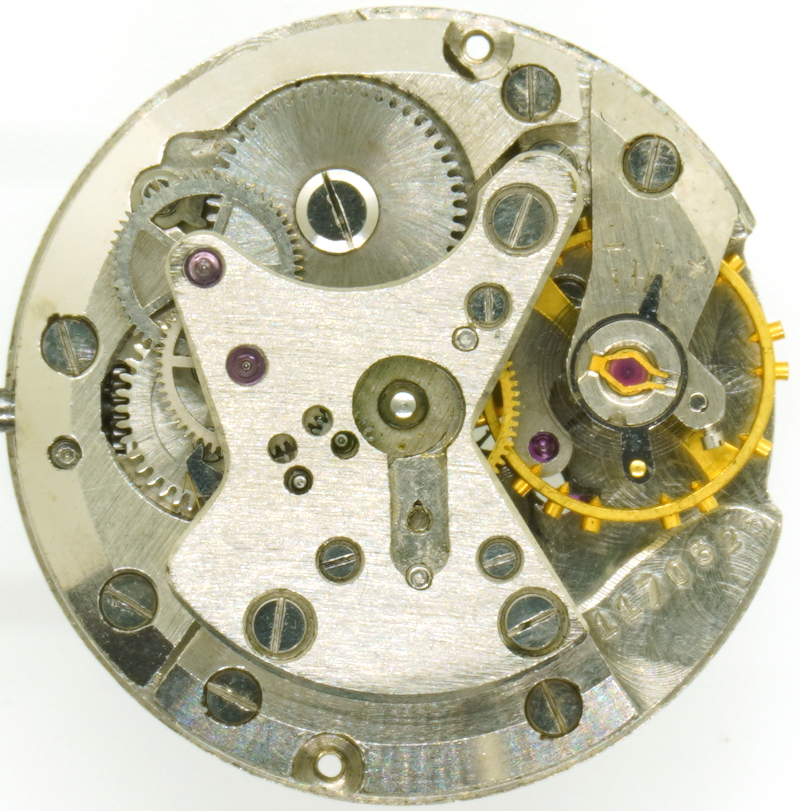
movement w/o oscillating weight
The rotor’s axle bearing is lined with a ruby.
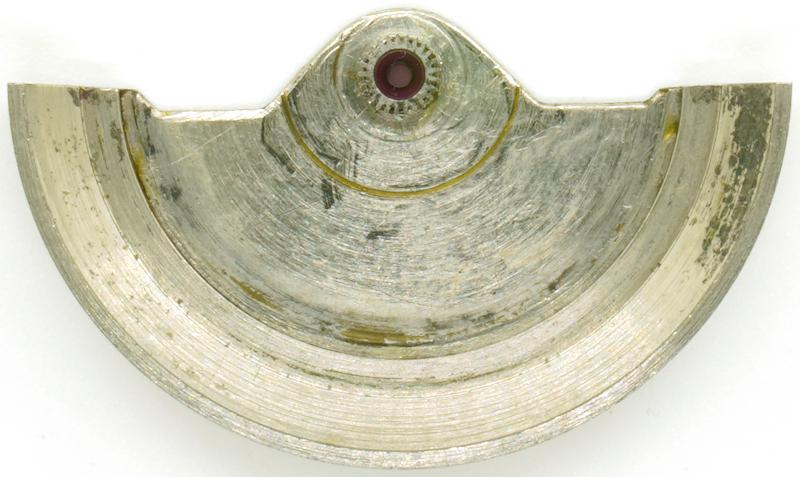
oscillating weight
It is easy to see that the rotor has a larger diameter than the movement itself, and therefore shall only be mounted once the movement is already installed.
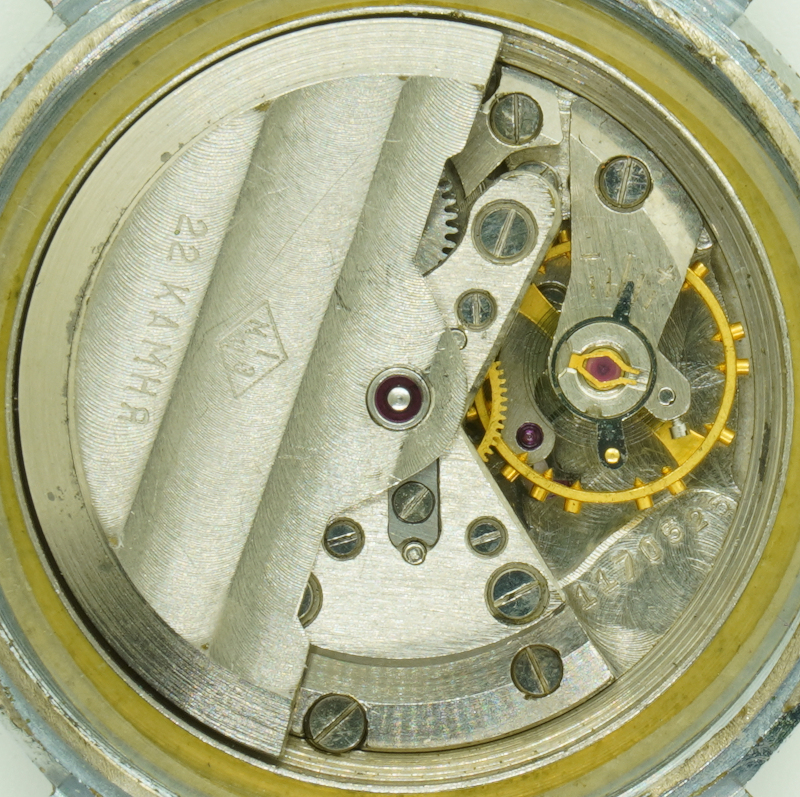
mounted movement
The dial side is quite unremarkable. One can see Poljot’s proprietary “Kirowskie” shock protection system, and on the opposite side, the yoke winding mechanism.
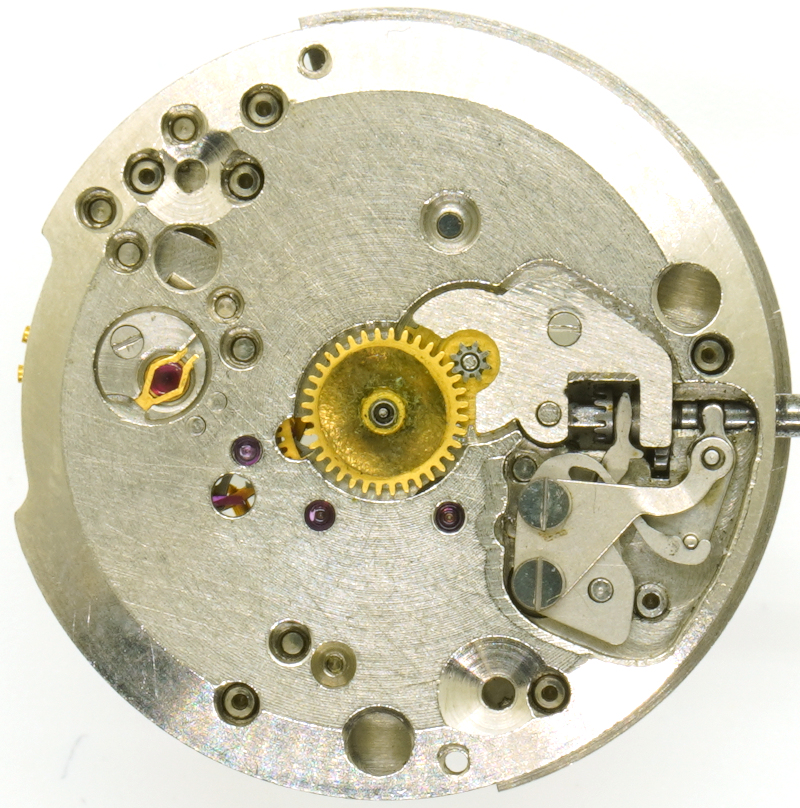
Poljot 2415A: Dial side
To conceal a little of the overall height, the dial-side base plate is beveled at the edge.
In the lab
Timegrapher result
You can see the ageing on this well used movement.| horizontal positions | |||
|---|---|---|---|
| dial up | -7 s/d | 233° | 2.6ms |
| dial down | +-0 s/d | 265° | 2.5ms |
| vertical positions | |||
| crown right (12 up) | -60 s/d | 198° | 3.7ms |
| crown up (3 up) | -9 s/d | 224° | 3.1ms |
| crown left (6 up) | -27 s/d | 205° | 2.8ms |
| crown down (9 up) | -60 s/d | 212° | 2.8ms |
Technical data
| Manufacturer: | Poljot |
| Caliber: | 2415A (Rodina) |
| Caliber base: | Poljot 2408 |
| Size: | 10 1/2''' (measured: 23,8mm) |
| Height: | 6,8mm |
| A/h: | 18000 |
| Number of jewels: | 22 |
| Escapement: | Pallet lever |
| Balance types: | Glucydur screw balance (two legs) |
| Shock protection(s): | Kirowskie-Poljot |
| Balance bearing / direction hairspring: | Clockwise |
| Moveable stud: | no |
| Adjust mechanism: | Short regulator arm |
| Construction: |
|
| Construction type: | solid construction |
| Winding mechanism: | yoke winding system |
| Setting lever spring: | 2 holes |
| Attachment of setting lever: | plugged |
| Features: |
|
| References: | Flume: K2 - |
| Inventory number: | 24053 |
Usage gallery
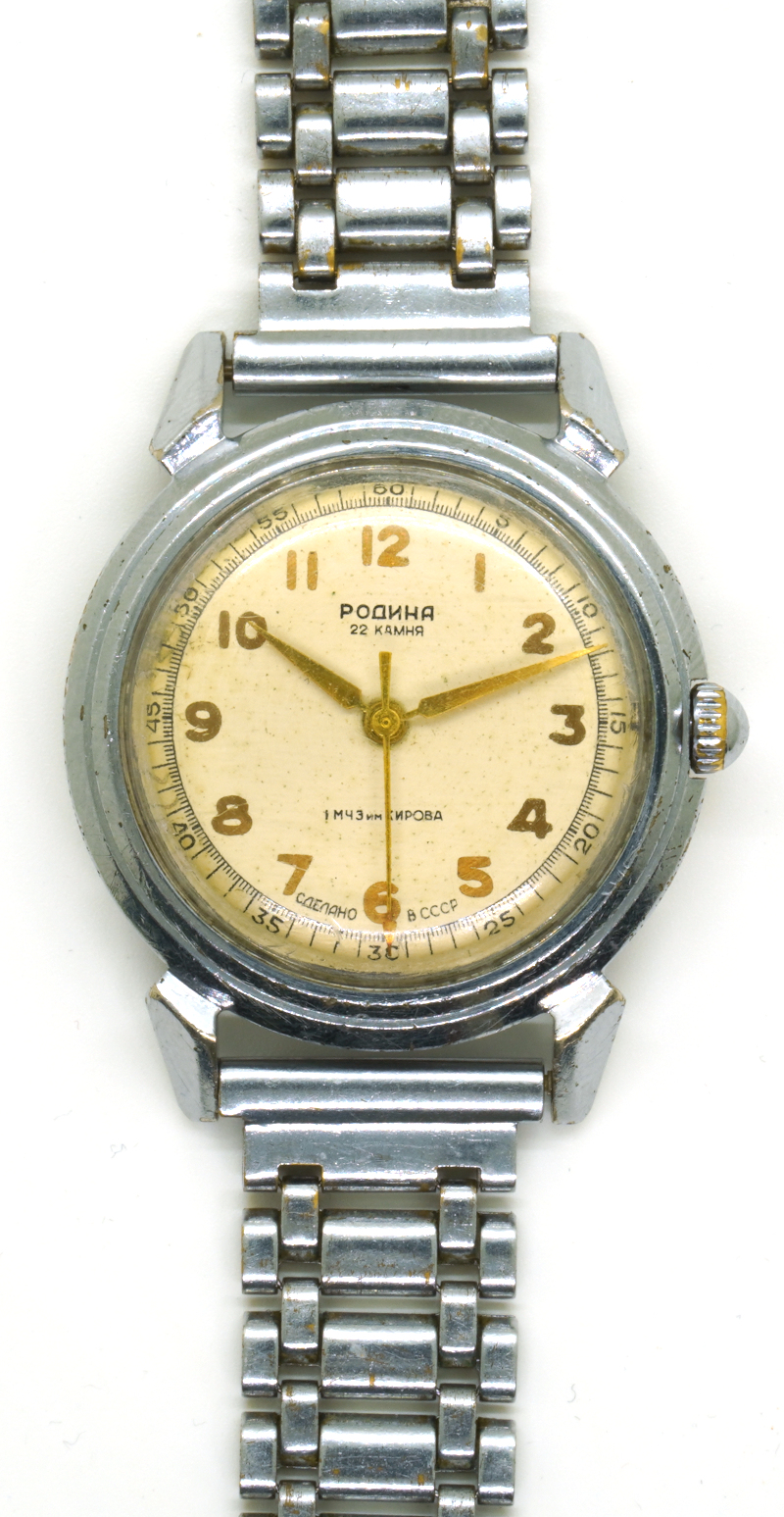
Rodina Automatic gents watch