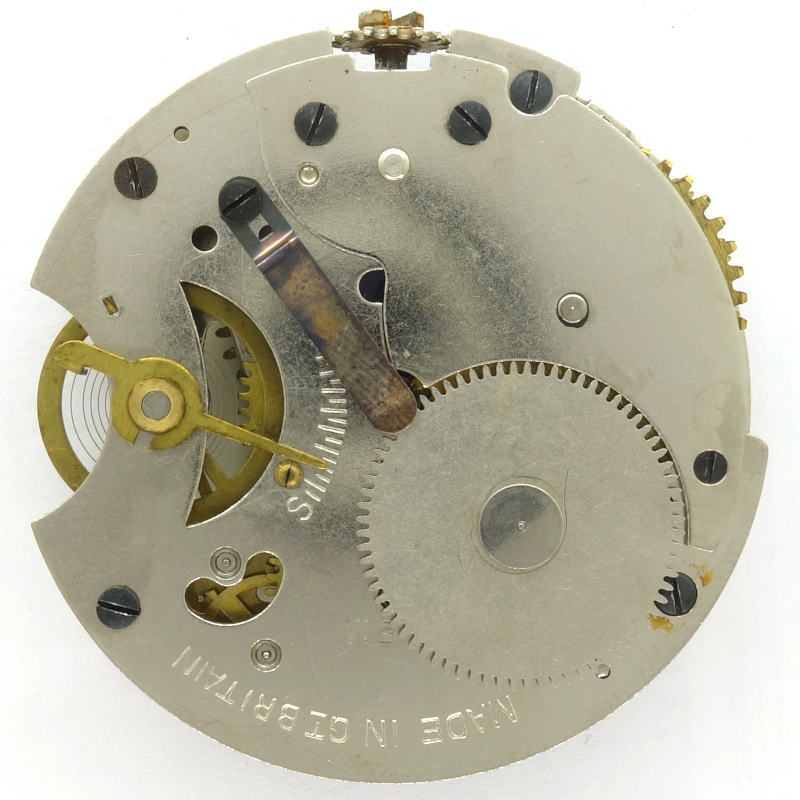
Smiths PY Empire
Description
From a “Yankee” Ingersoll caliber dating back to the 1890s, the English, no less simple pocket watch caliber Smiths PY Empire with a size of 19 lignes emerged around the middle of the last century.
It was produced by the Anglo-Celtic Watch Factory, which was established in 1946 as a kind of joint venture between Smiths Industries and Ingersoll and became the largest British watch factory until it ceased production in 1980.
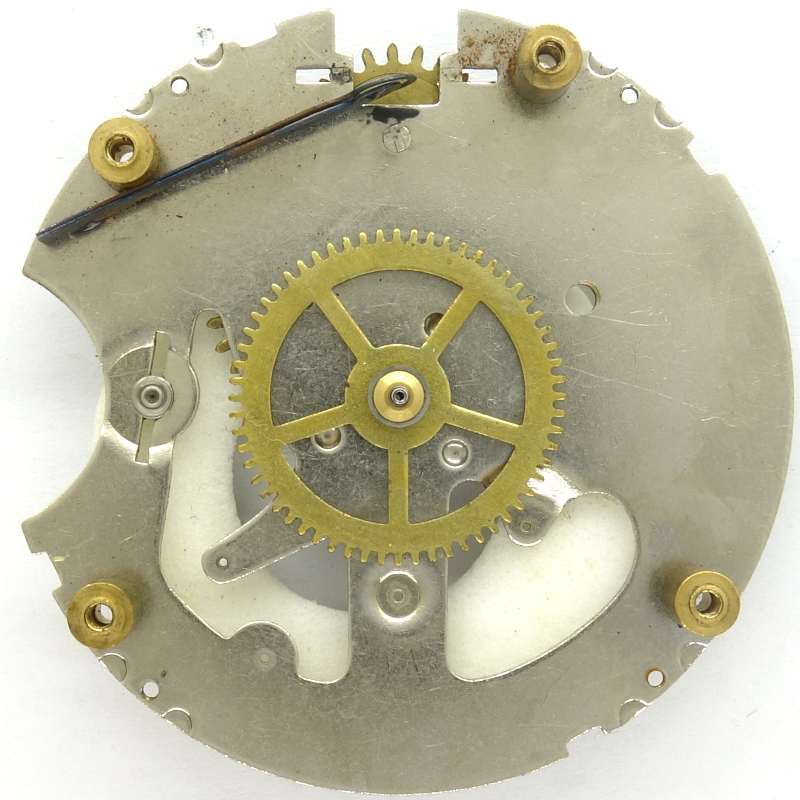
base plate
The base plate of this pillar caliber is simply stamped. There are no jewels, but all bearings are just simple drilled holes.
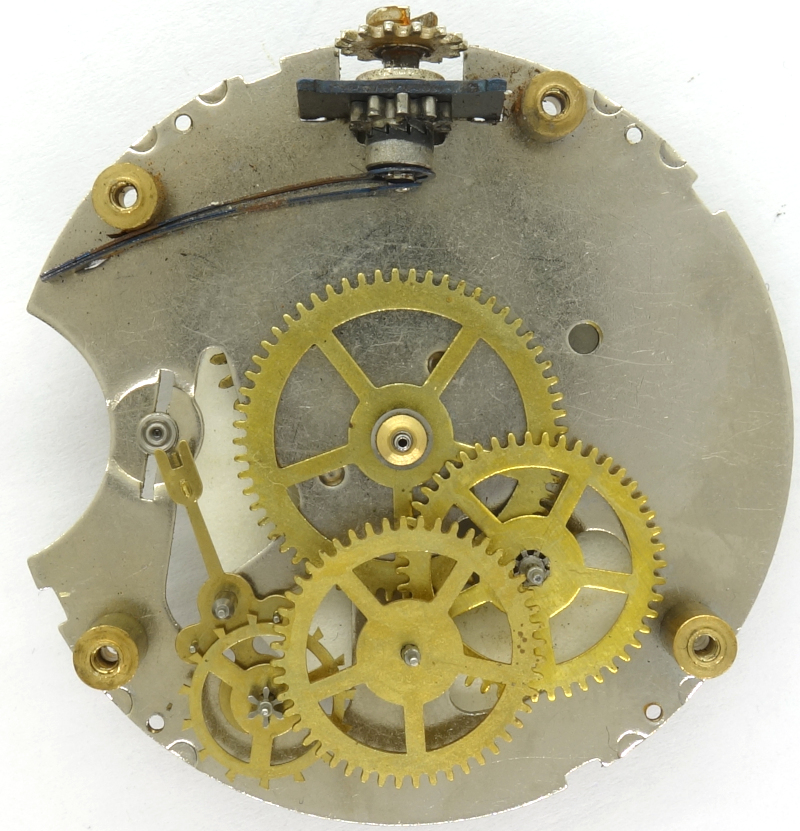
gear train
The cear train is of conventional design. The mainspring barrel (at position 2 o’clock – the bearing is clearly visible here) drives the central minute wheel, followed by the third wheel, the seconds wheel at 6 o’clock, and the escape wheel.
The escapement is also mounted under the same, single, plate.
The Smiths PY Empire features an indirect central seconds display, driven by a wheel, mounted on the third wheel’s pivot.
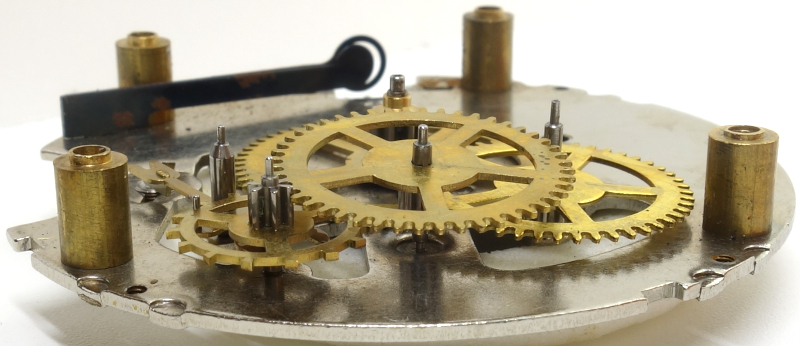
side view of the gear train
The balance wheel is a two-leg anular balance with a center pivot bearing. The movement side pivot bearing is height-adjustable.
The beat rate (probably 14,400 semi-oscillations per hour – this could not be reliably determined with the available example) can be adjusted using a long regulator arm.
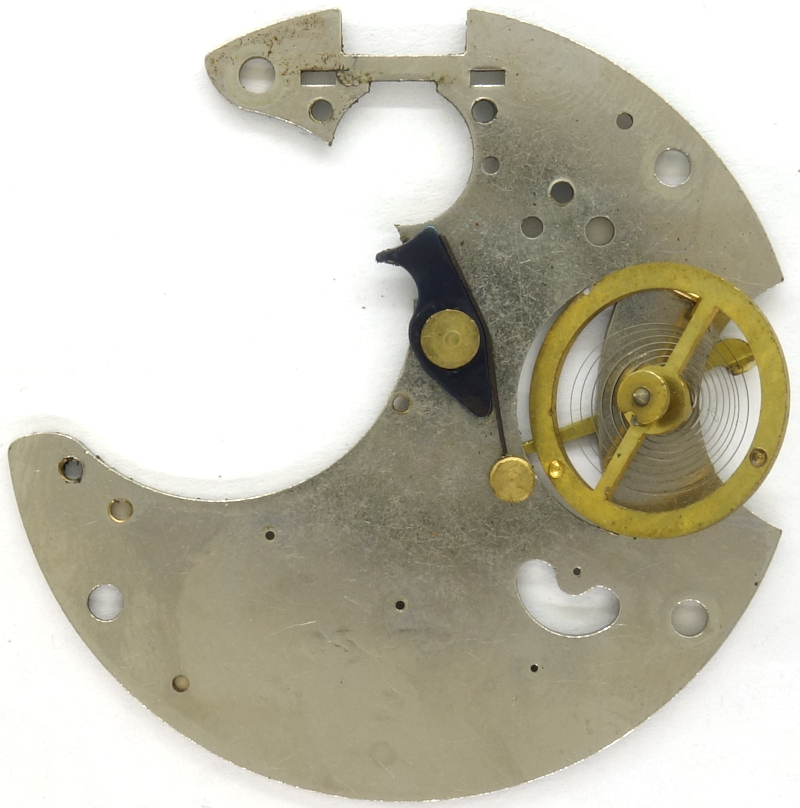
inside the gear train bridge
The ratchet is located on the inside of the gear train bridge, as is the balance wheel.
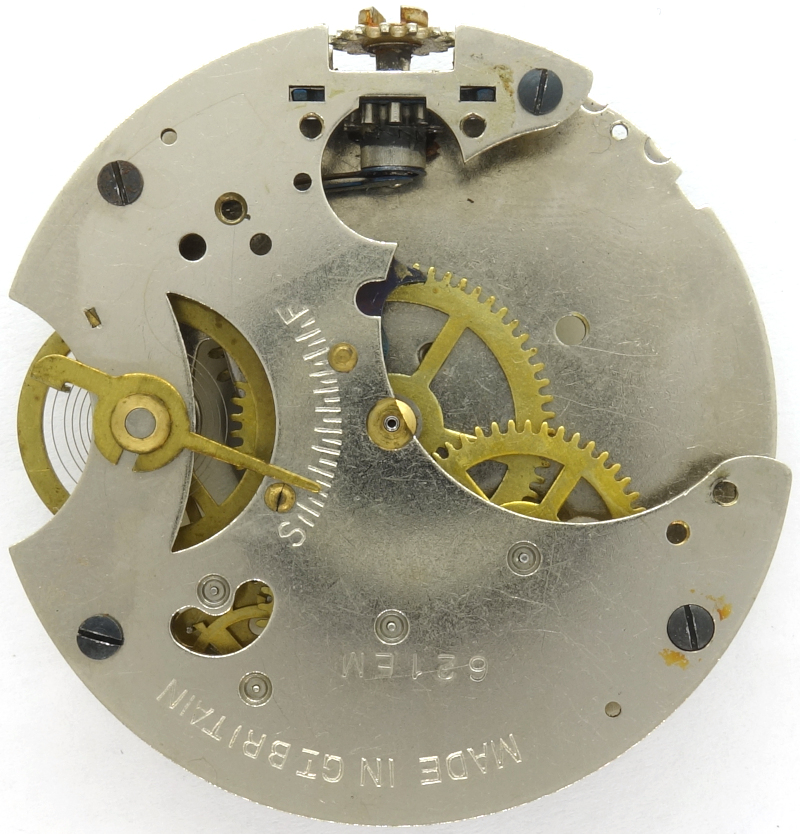
w/o mainspring barrel
You can see, that the spring barrel can be removed separately. This is very useful in case of a broken spring.
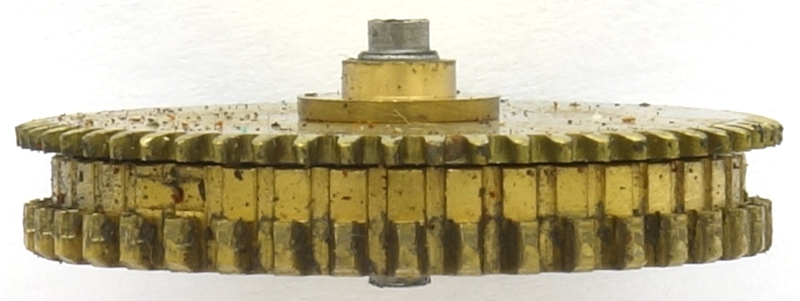
barrel
The mainspring barrel has a ratchet wheel on its upper side, which has the same diameter as the lower gear ring of the mainspring barrel.
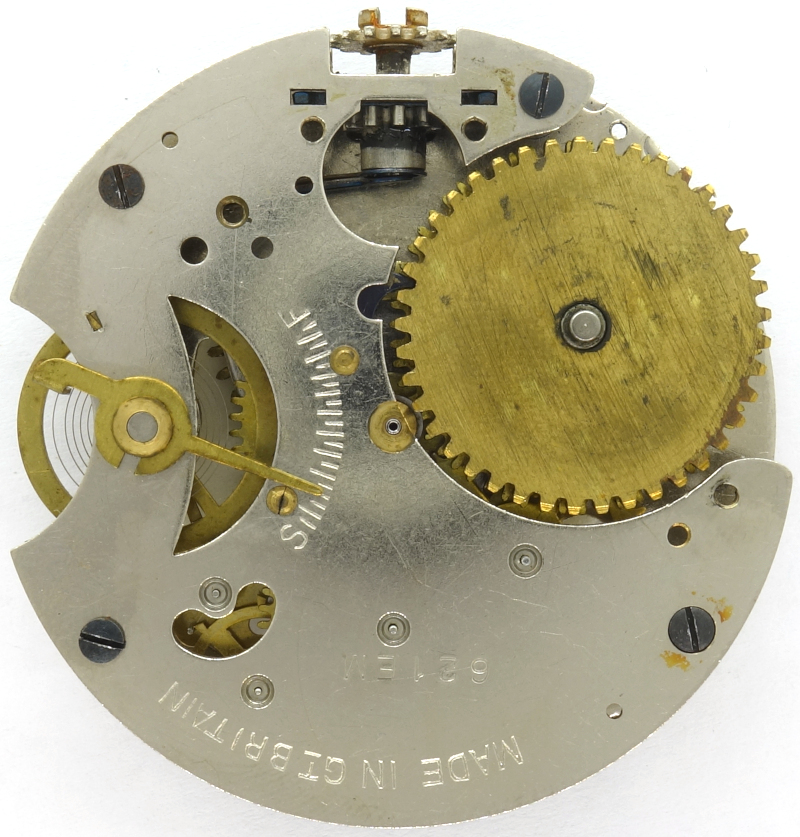
w/o gear train bridge
The reason for this is that there is a small mainspring barrel bridge on which the crown wheel is riveted.
It engages with the mainspring barrel and the winding linkage wheel.
When the crown stem is pressed down, or the crown is turned counterclockwise, the Breguet clutch at the lower end of the crown stem disengages the crown, meaning the winding linkage wheel is no longer moved by the sliding pinion.
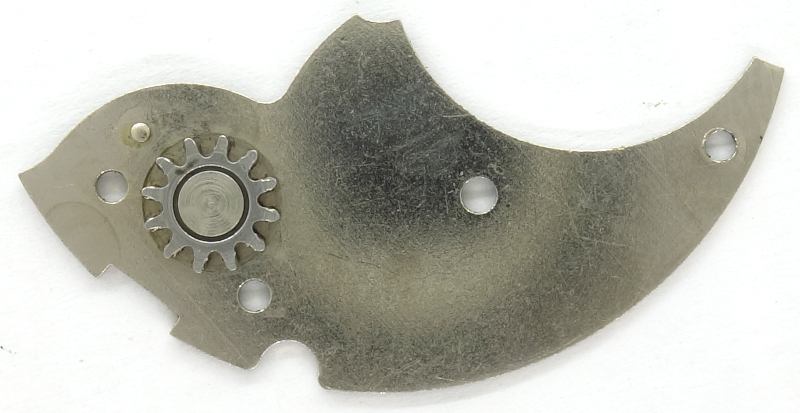
inside the barrel bridge
When the crown is pushed in, the upper setting wheel, which is fixed to the winding stem, engages with the coarse hand-setting mechanism on the dial side. This so-called negative setting mechanism is typical for such very simple pocket watch movements of American origin.
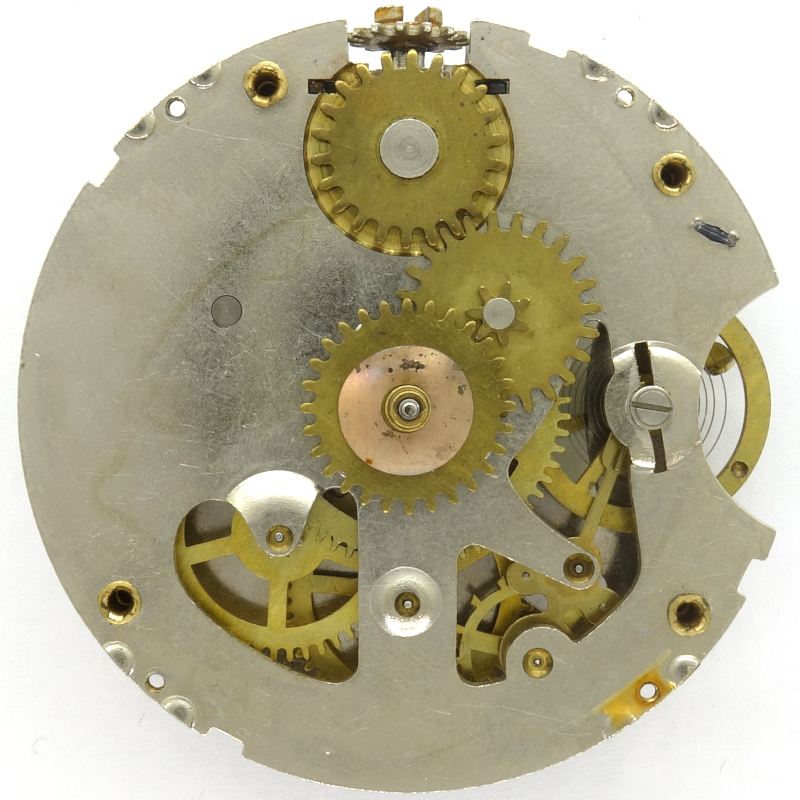
Smiths PY Empire: Dial side
As mentioned before, the height-adjustable bearing for the balance wheel can be seen on the dial side.
Technical data
| Manufacturer: | Smiths |
| Caliber: | PY Empire |
| Size: | 19''' (measured: 45,4mm) |
| Escapement: | Pin lever |
| Balance types: | monometallic anular balance (two legs) |
| Shock protection(s): | none |
| Balance bearing / direction hairspring: | Counterclockwise |
| Moveable stud: | no |
| Adjust mechanism: | Long regulator arm |
| Construction: |
|
| Construction type: | pillar construction |
| Winding mechanism: | special winding system |
| Features: |
|
| References: | Flume: K2 - |
| Inventory number: | 24035 |
Usage gallery
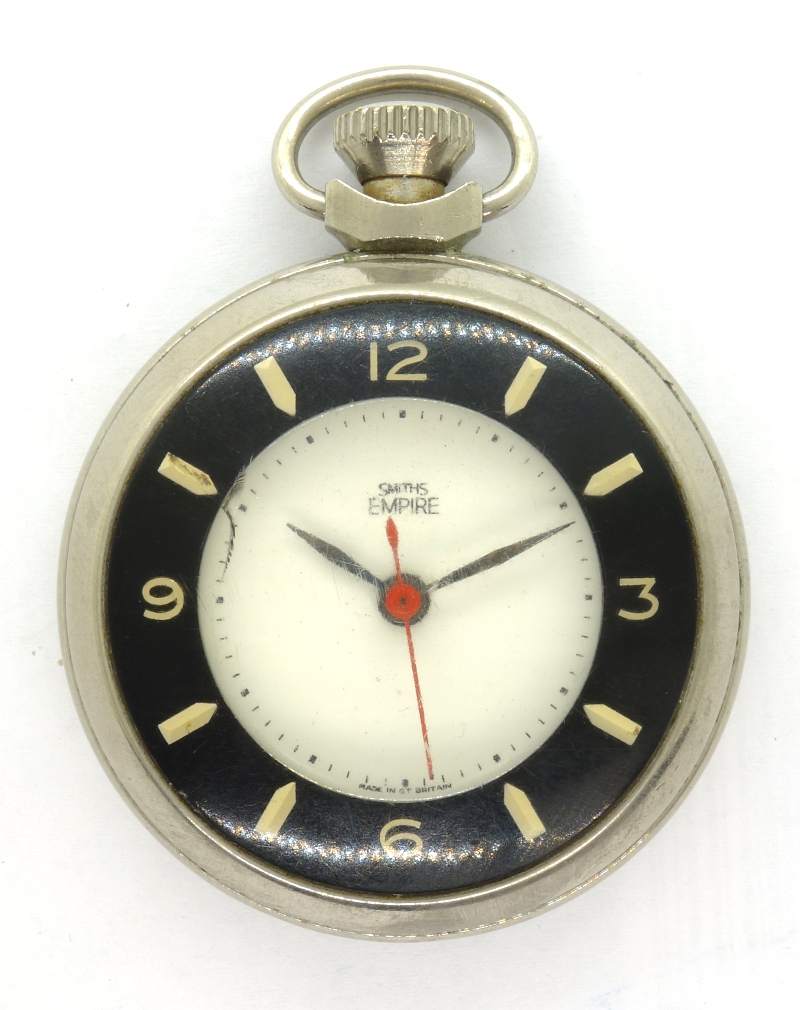
Smiths Empire pocket watch